
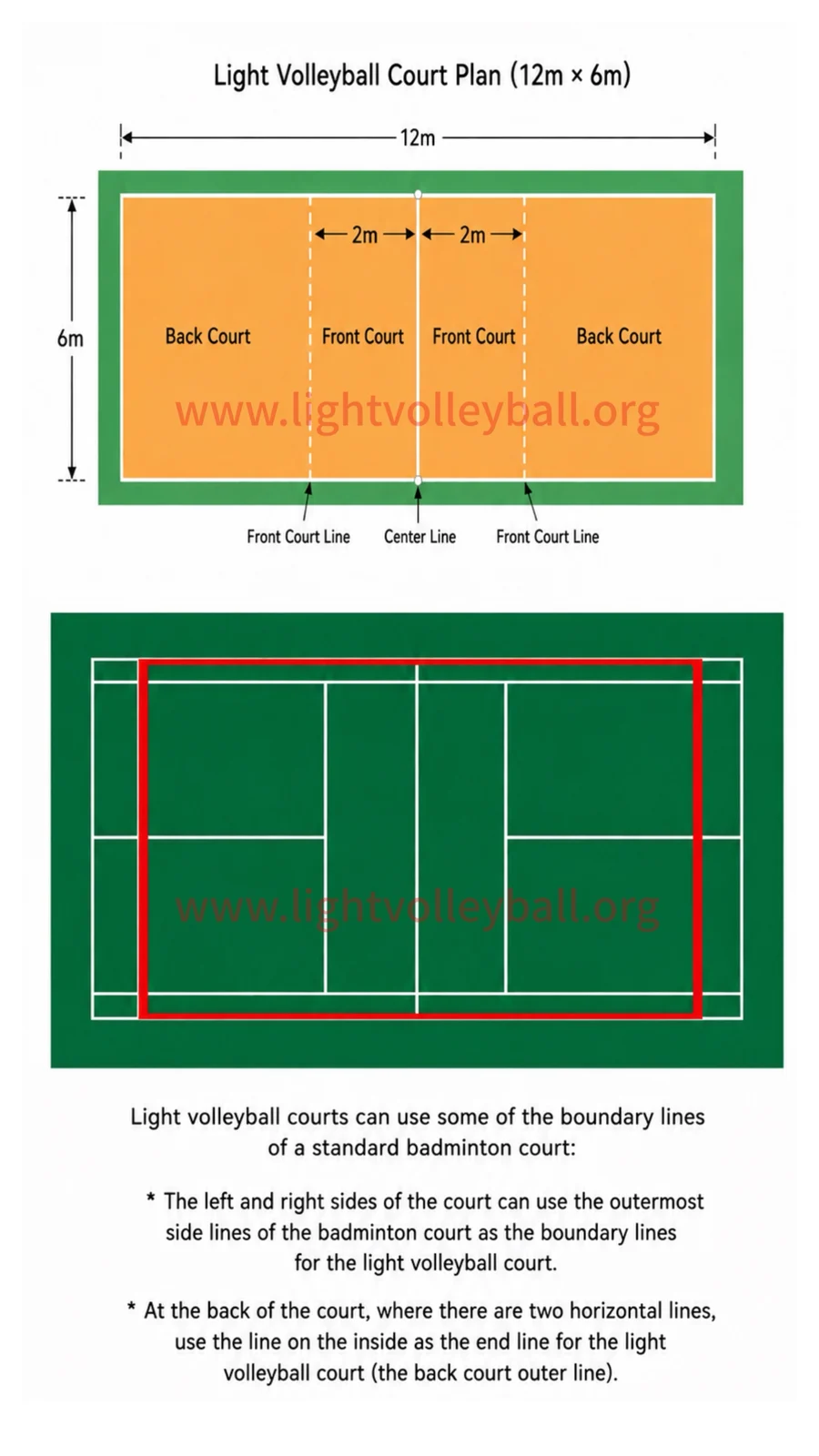
Court Size
Light Volleyball uses a 12m x 6m court, with a 2m front zone on each side.
The smaller court keeps rallies active and makes the game easier to join on badminton-sized venues.
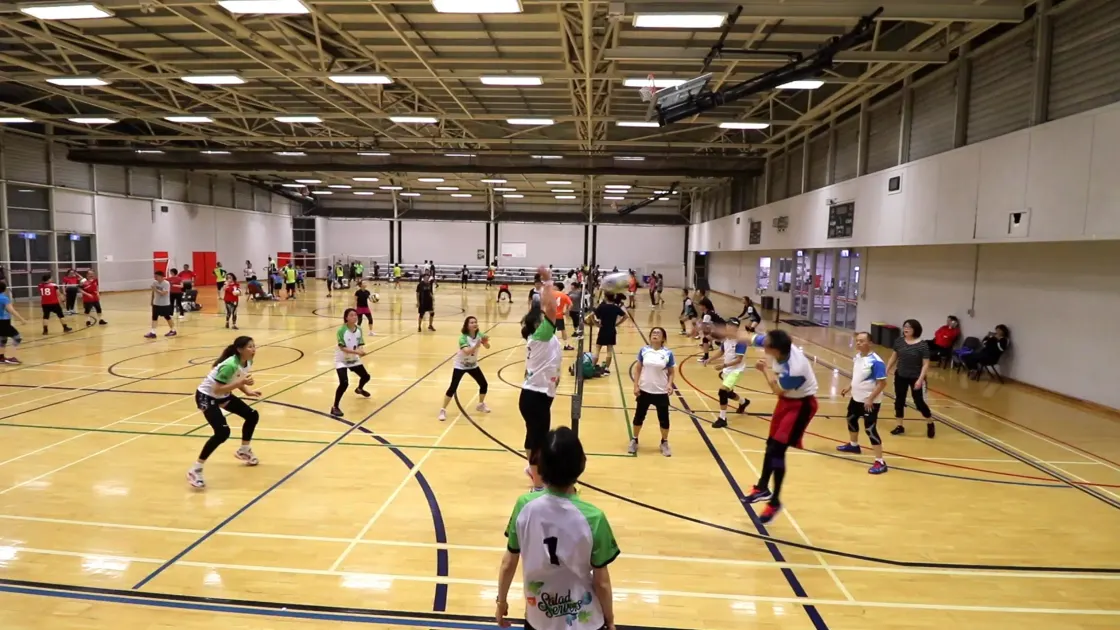
Light Volleyball is a new sport evolved from traditional volleyball, born in 1980s China. It offers a fun, easy-to-learn way to exercise and socialise — like karaoke or zumba, but on a sports court!
| Light Volleyball | Traditional | |
|---|---|---|
| Weight | ~125g | ~270g |
| Diameter | ~25cm | ~21cm |
| Men's net | 2.1m | 2.43m |
| Women's net | 1.9m | 2.24m |
| Mixed net | 2.0m | — |
| Players | 5 (3 front, 2 back) | 6 (3 front, 3 back) |
| Court size | 12m × 6m (badminton court) | 18m × 9m |
Learn the key rules quickly through simple diagrams, designed for new players, organisers, and referees.
Light Volleyball uses a 12m x 6m court, with a 2m front zone on each side.
The smaller court keeps rallies active and makes the game easier to join on badminton-sized venues.
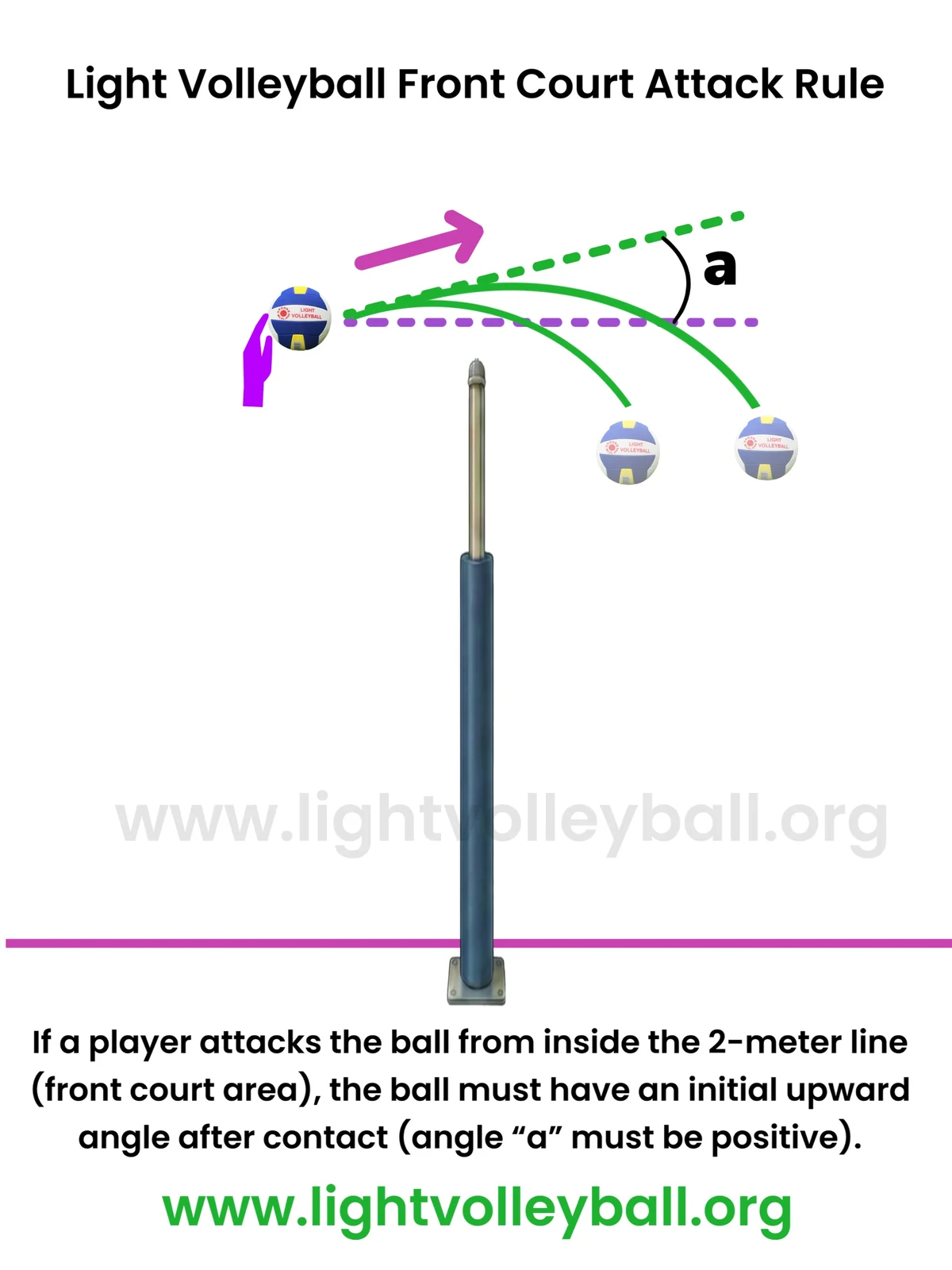
From inside the 2m front zone, a ball sent over the net must travel upward first.
Flat or downward attacks from the front court are not allowed.
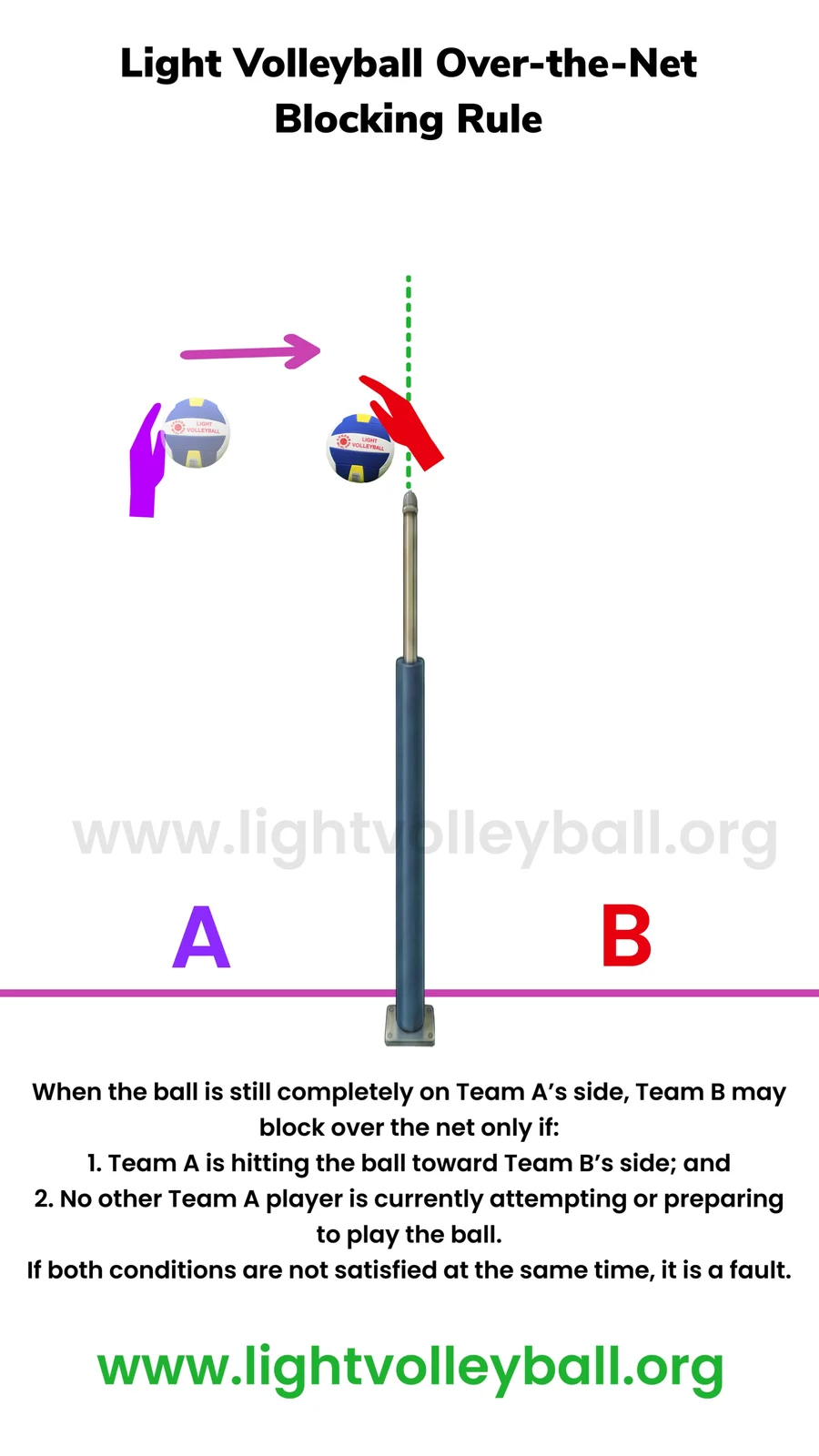
When the ball is still completely on Team A’s side, Team B may block over the net only if: 1. Team A is hitting the ball toward Team B’s side; and 2. No other Team A player is currently attempting or preparing to play the ball. If both conditions are not satisfied at the same time, it is a fault.
When the ball is still completely on Team A’s side
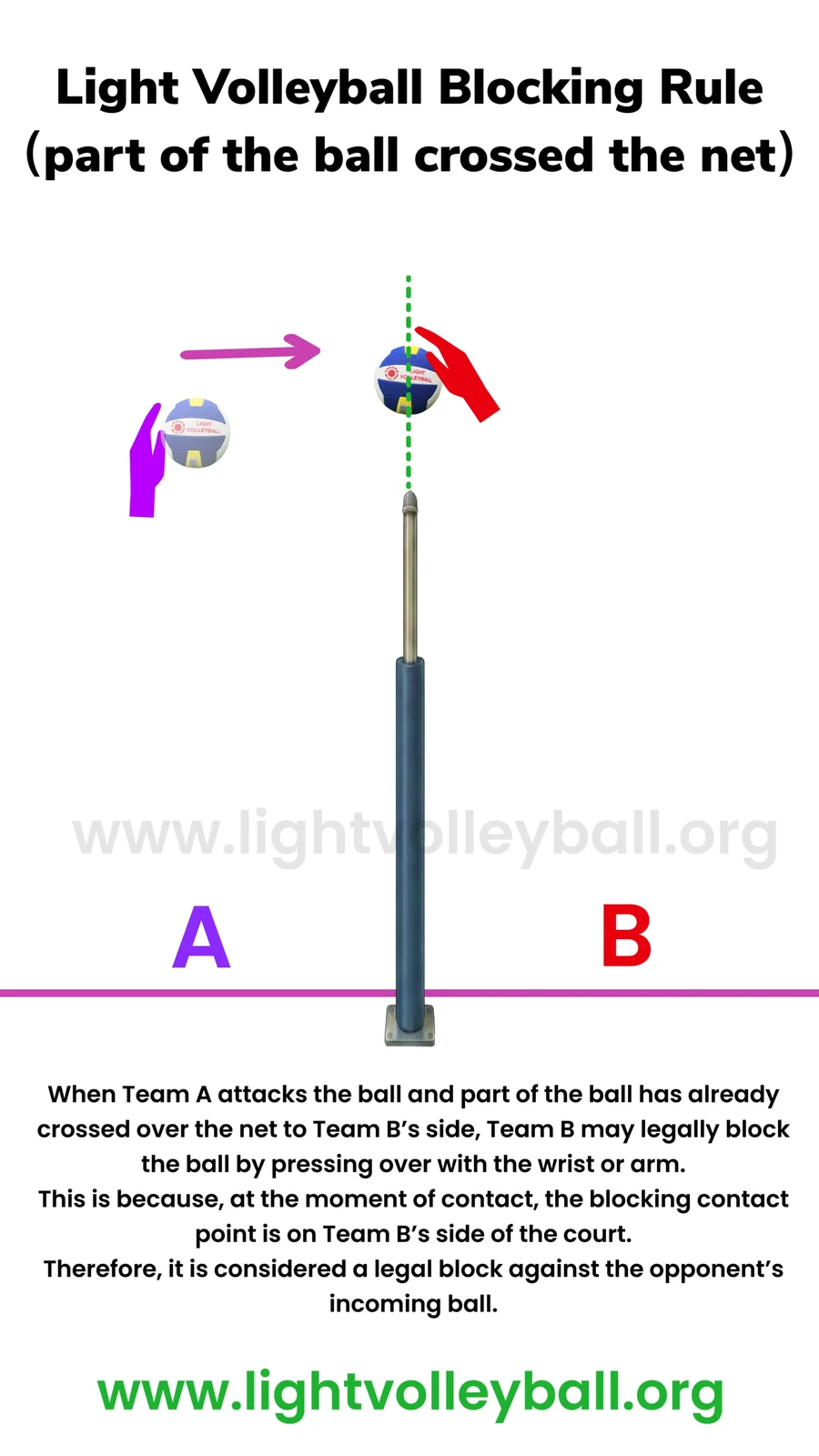
When Team A attacks the ball and part of the ball has already crossed over the net to Team B’s side, Team B may legally block the ball by pressing over with the wrist or arm. This is because, at the moment of contact, the blocking contact point is on Team B’s side of the court. Therefore, it is considered a legal block against the opponent’s incoming ball.
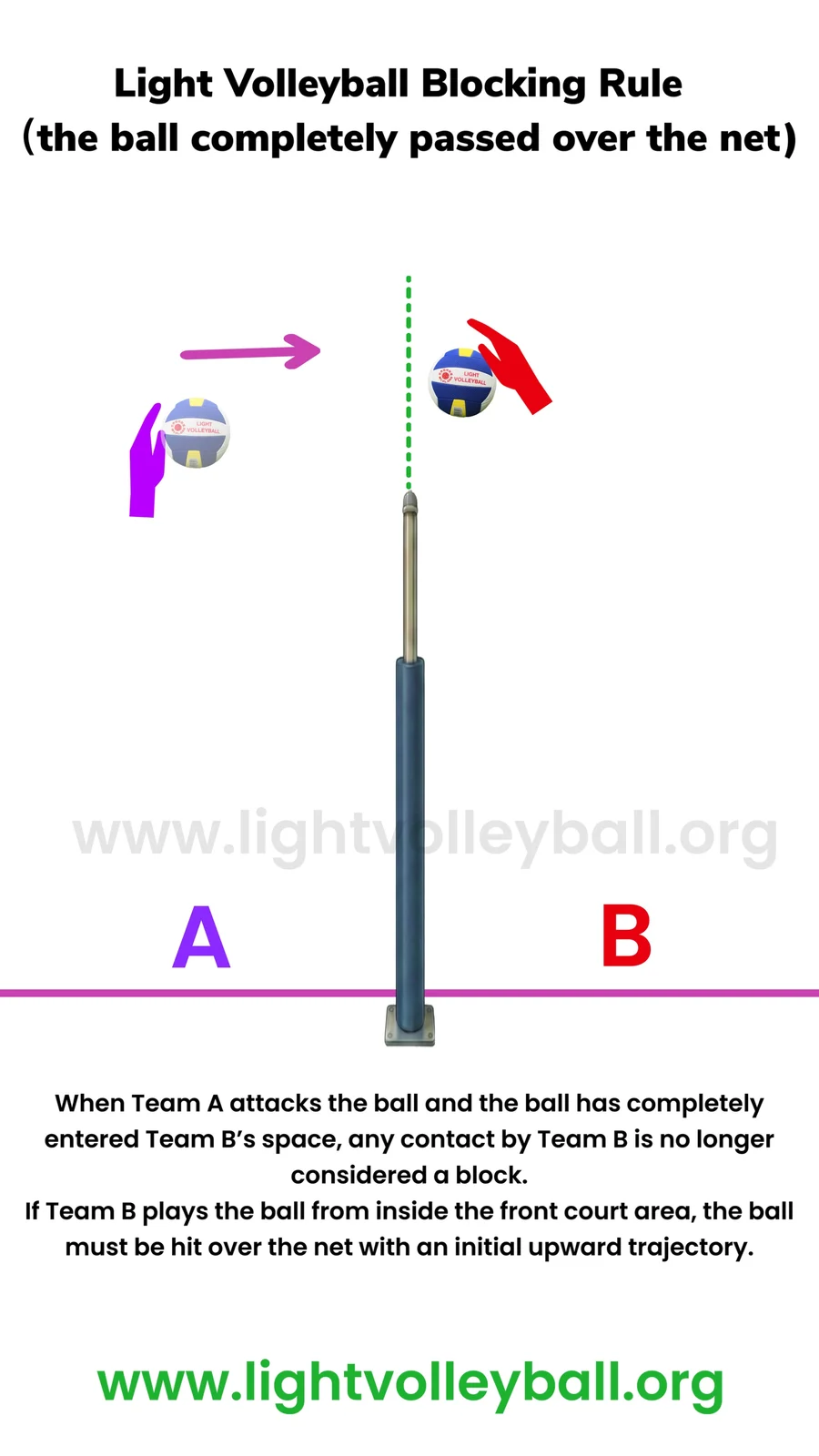
When Team A attacks the ball and the ball has completely entered Team B’s space, any contact by Team B is no longer considered a block. If Team B plays the ball from inside the front court area, the ball must be hit over the net with an initial upward trajectory.
The objective is the same as traditional volleyball — hit the ball over the net within the rules, until it lands or the other side makes an error.
The side with the ball is the 'attacking side', the other is the 'defending side'. A ball travelling toward the net is an 'attack ball'.
When attacking from within the 2-metre front zone, the ball must initially travel upward — not flat or downward. This means no hard spikes from the front court like in standard volleyball, greatly reducing injury risk and encouraging longer rallies.
Defenders may reach over to block an attack ball, but not while the attacker is in the act of hitting.
Defenders can block when the attack ball reaches the plane of the net. Wrist and arm press allowed. Only front-row players may block.
If the ball is not heading over the net (a 'non-attack ball'), defenders cannot reach over to touch it.
Defenders cannot block a serve. When receiving a serve, you cannot hit the ball directly over the net while any part of it is above net height inside the court.
The winning side serves. Rotation is clockwise. No player may serve consecutively.
Each side may touch the ball up to 3 times. No player may hit the ball twice in succession, but successive contacts by different body parts in one action are allowed. Block touches don't count.
These notes explain the logic behind the rules and are especially useful for players who are still learning how calls are judged.
The side where the whole ball is located is the attacking side, and the other side is the defending side. The aim of play is that the attacking side tries to send the ball over legally, while the defending side tries to prevent the whole ball from fully entering its court, also within the rules. The instant the whole ball passes above the net from the attacking side to the other side, the original attacking side becomes the defending side and the original defending side becomes the attacking side. The vertical plane of the net is the boundary where attack and defence switch.
An attacking hit is a contact made while the whole ball is still on the attacking side and is then directed toward the opponent's space. A blocking hit is a contact made before the whole ball has fully entered the defending side, with the purpose of stopping it from fully coming across. These are different concepts. An attacking hit is not a blocking hit, and a blocking hit is not an attacking hit.
When part of the ball is touching the vertical extension of the net, the defender's contact at that moment is considered to be in their own space. In that situation, it is not an illegal over-net hit and not interference with the opponent's hit. It is a legal block.
Whether a blocking contact is a fault does not depend on the arm action used or on how far the player is from the net. The key question is whether the contact, at that moment, qualifies as a legal blocking action. If blocking is allowed in that situation, then pressing the wrist, turning the wrist, pressing the arm, or blocking from farther away are all permitted.
A blocker may reach over the net only when the ball is an attacking ball and no opponent is currently hitting the ball or about to hit the ball.
In the rules, any contact with the ball is treated as a hit. There is no separate distinction between so-called active and passive contact.
When a player is inside the 2-metre line, a ball played over the net may not travel flat or downward at the start. Its initial flight must be upward. This judgment does not depend on the hitting technique, how hard the ball was struck, or the ball speed.
In rule interpretation, a contact is not judged legal or illegal based on whether the motion looks good or bad. The judgment depends on where the player is positioned at contact, where the ball is at contact, and the ball's flight path after contact.
Join a local Light Volleyball session and meet the community around the game.